
Embedding Quotes: How do you do it?
One of the most important yet often forgotten elements of Text Response is embedding quotes. It makes an immense impact of the quality of writing but it is not always directly taught. Often, by the time we reach VCE, there is an assumption that students already know what to do, but that is not always the case.
Why do we need to embed quotes?
There are two main reasons as to why embedding quotes is asked for in text response writing.
The first one is associated with written expression - in short, it reads better when a quote is embedded. The flow of the sentence is not impacted when a quote is embedded, whereas when it is thrown in, it can be jarring to read.
The second reason is to increase the chances of selective evidence, as it is more important to have quality evidence than to demonstrate just how many quotes you can remember.
What is ‘embedding quotes’?
When you embed quotes, you insert the quote within the sentence structure so that there is no interruption of the flow of the original sentence. You can check if the flow is right by removing the ‘quotation marks’ and seeing if the sentence still makes sense. (Make sure you put them back for the actual essay!)

Photo by Ján Jakub Naništa on Unsplash
Here are two examples to compare (We Have Always Lived in the Castle, pg. 1):
UNEMBEDDED: Merricat’s fixation with routine manifests itself in her description of the Blackwood household more broadly. ‘We always put things back where they belonged.’
EMBEDDED: Merricat’s fixation with routine manifests itself in her descriptions of the Blackwood household more broadly as a family ‘[they] always put things back where they belong’.
How do you embed a quote?
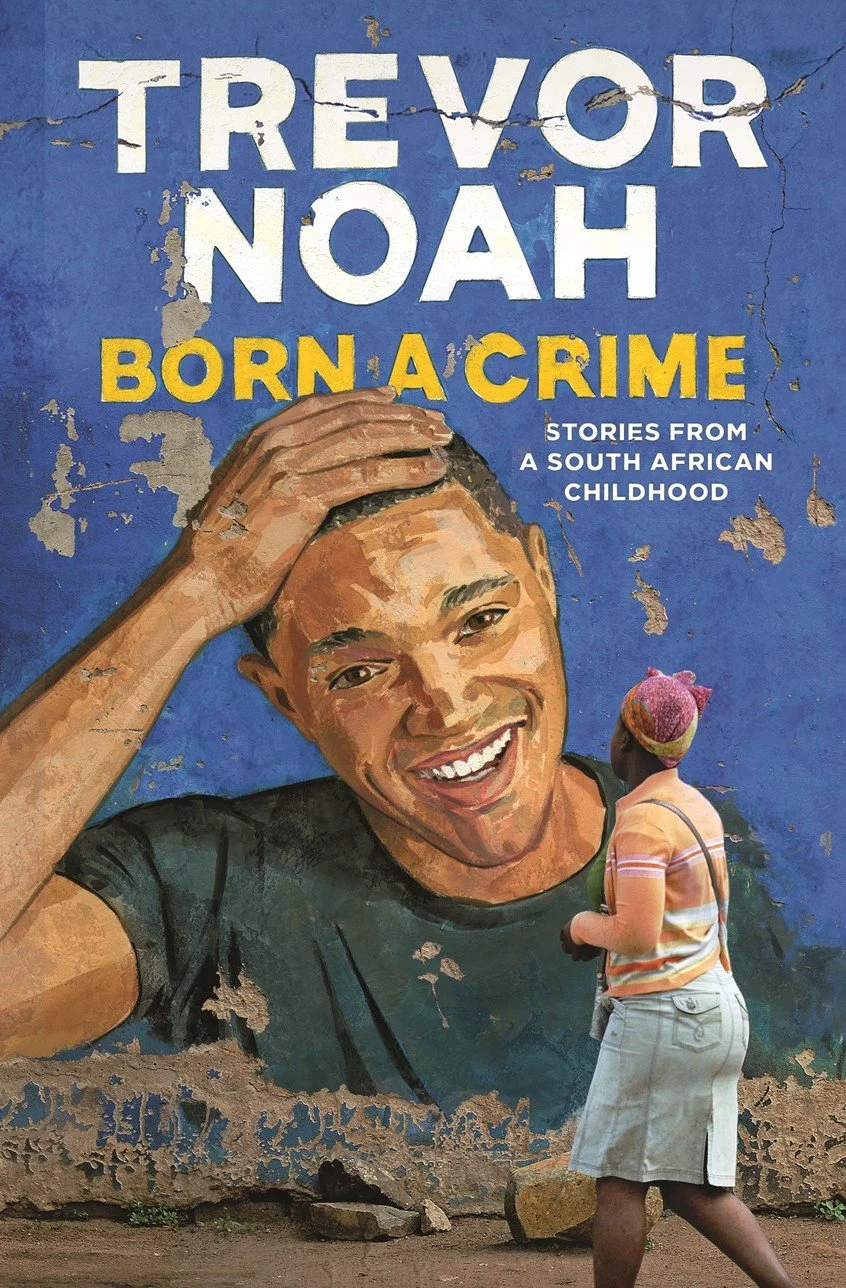
Born a Crime by Trevor Noah cover illustration (Simon & Schuster)
There are a couple of steps that help break down the embedding of a quote; some of it may already feel natural to you, but some others may be newer. Here are the steps
Grab the quote that you’d like to analyse in your writing.
(Born a Crime, pg. 115) ‘The curse that colored people carry is having no clearly defined heritage to go back to’
Figure out the scope of what you want to discuss in relation to this quote and the prompt that you are responding to
For this quote, I want to discuss identity.
Now that you have figured out what you want to discuss, pick a small part/s of the quote that elevates that idea
For this quote, ‘curse’, ‘no clearly defined heritage’ and the rest of it can be paraphrased
Now outline a sentence of analysis for this quote and try to embed those key words/ phrases
Noah reveals that the complex history of South Africa has additionally provided colored people with a unique struggle as they are ‘curse[d]’ with ‘no clearly defined heritage’, unable to refer back to a clear ancestry to help inform their present identity.
Can you change the quote to embed it?
Yes, you can only if you are editing it for grammatical purposes and the meaning of the sentence does not change. Usually, pronouns are changed and tenses are often shifted depending on the sentence. When you change something in a quote, you should put [square brackets] around the part that is changed. Let’s see the two examples from earlier;
‘We always put things back where they belonged.’ (We Have Always Lived in the Castle, pg. 1)
This quote uses the pronoun ‘we’, which we cannot use in a text response essay, so instead we need to change it to ‘they’.
‘The curse that colored people carry is having no clearly defined heritage to go back to’ (Born a Crime, pg. 115)
In this sentence, there is nothing inherently incompatible with text response essays, but with the way we framed the sentence, we wanted to shift the word ‘curse’ from a noun to a verb in the past tense. From ‘curse’ to ‘curse[d]’
Additionally, some students have the concern that they have to use the quote as a whole; you definitely do not need to. You can pull out the parts of the quote that are relevant and you can cut the middle part out as long as the overall meaning of the quote isn’t changed.
Looking at the example from earlier, we had this quote: ‘The curse that colored people carry is having no clearly defined heritage to go back to’. This quote would be a tad too long for the essay, so we can utilise parts of it, such as ‘curse’ ‘no clearly defined heritage’. The meaning stays the same in this sentence.
Noah reveals that the complex history of South Africa has additionally provided colored people with a unique struggle as they are ‘curse[d]’ with ‘no clearly defined heritage’, unable to refer back to a clear ancestry to help inform their present identity.
Let’s go through some more examples:
The Rescue of the Infant Oedipus
1663
Salvator Rosa
Text: Oedipus the King
Quote: ‘If you are the man he says you are, believe me, you were born for pain’ (Episode 3, line 1034-5)
Incorrect Example 1: Oedipus’ life unfolds in a manner that appears to ‘have been destined by his birth for this struggle.’
What’s wrong with it: Meaning is similar but we have paraphrased too much and have completely reworded the quote whilst claiming it is a quote through the quotation marks.
Incorrect Example 2: Oedipus is told by the Shepherd: ‘You were born for pain.’
What’s wrong with it: While this example keeps the quote’s meaning, it does not maintain a sentence flow - there is a disjointedness with it, and the quote is separated through colon (:). This decreases the quality of the written expression of the essay
Correct Example: Oedipus’ life unfolds in a manner that appears that ‘[he was] born for pain’, with the terror of his blind actions stemming from the actions of his parents when he was a baby.
What’s right with it: The quote has been changed to grammatically fit the sentence, but the meaning remains the same. The quote is not a large passage but rather a short, sharp and direct quote that directly links to the analysis. Of course, if we use the little trick, with the quotation marks removed, the sentence still makes grammatical sense.

The Memory Police by Yoko Ogawa’s cover illustration b Penguin Vintage.
Prompt: In The Memory Police, silence is both a tool of oppression and a tool of resistance.
Discuss
Sample Writing:
However, Ogawa illustrates silence as a vital tool of resistance as it allows the citizens of vital means of psychological liberation to escape the regime’s control. Ogawa’s ambivalent stance towards silence is exemplified in the old man’s frank concession to ‘never read the narrator’s novel to the end’, as to do so would be ‘wasteful’. The old man’s conscious refusal to invest in meaning and instead remain passive reflects more than mere ideological fatigue, suggesting deliberate silence as a vital means of self-preservation that numbs suffering. His calm rationalisations of loss – telling the narrator to ‘not worry’ about the disappearances underscores the paradox of the novel’s tone: gentle and tender, even amid systematic breakdown. Thus, Ogawa reconceptualises silence and a lack of resistance as not a moral failure, but a form of resistance in itself as it allows the residents to psychologically break free of the regime’s clutches. This is most powerfully encapsulated in the narrator’s ultimate disappearance, which is paradoxically rendered as a form of ‘liberation’ in itself. The biblical connotations of ‘liberation’ suggest that silence is the only form of salvation that allows the citizens to escape rather than futile resistance. Thus, though Ogawa ultimately condemns silence, she extols it as a vital form of resistance as it provides avenues of liberation from the regime’s control when even resistance cannot.
Final thoughts
Hopefully you can see now that embedding quotes is easier than you may think and their impact is huge, so it is worth the effort to try tweak your skills to ensure that you are acing embedding quotes. There are also many sample writing in VCAA’s past examiner reports that you can check out to help you see embedding quotes in action.
