
‘Sunset Boulevard’: What is film noir?
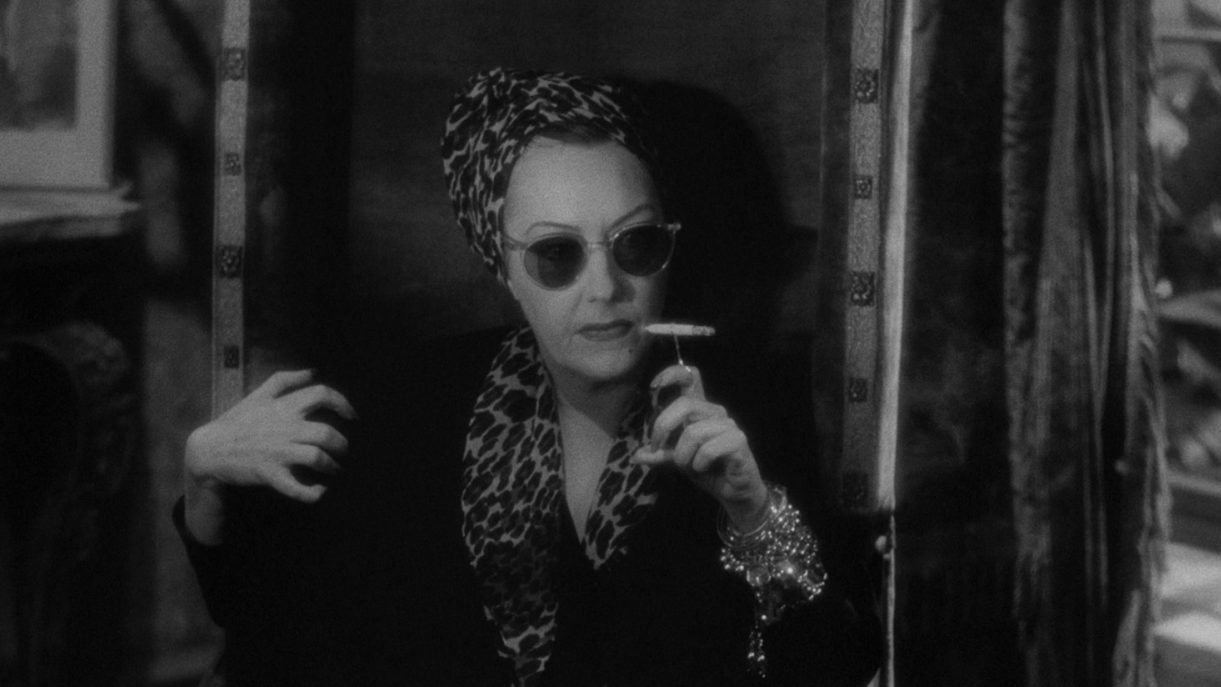
Download our free infographic poster on film noir in Sunset Boulevard here!
Film Noir, according to some, is a genre and to others it is a style of filming. That is not our dilemma to solve but rather we will focus on what exactly it involves, how it connects to ‘Sunset Boulevard’ and finally, how you can spot film noir techniques to discuss in your essays.
Brief History
Film Noir was most prevalent in the USA around the 40s and 50s and typically was utilised in crime dramas. They were often dark, pessimistic and showcased a disillusionment present within American society that was brewing from pre WWII era all the way to post WWII life. With economic instability, the impact of war, both WWII and the threat of the Cold War, McCarthyism and many other difficult aspects of life in the 40s, Film Noir exposed the underbelly of humanity and society at large.
Components of Film Noir
Character Archetypes
Femme Fatale
This is the ‘deadly’ woman who often uses seduction and sexual allure to manipulate those around her (typically men whom she emasculates). The Femme Fatale is sometimes associated with spiders - think of the imagery of a female spider luring a mate to then kill him once she is done with him. What makes the Femme Fatale so dynamic is that she is not always just treated as a two-dimensional ‘villain’ but rather can be positioned sympathetically. Audiences are often prompted to consider the circumstances of the Femme Fatale, who, instead of remaining a unreasoned villain, develops a status of victimhood herself. Nevertheless, the Femme Fatale presented women with a sense of power (even if it is one of vengeance or what would be considered villainous) that was not easily afforded to women outside the scope of the film.
Norma Desmond wonderfully fulfils the Femme Fatale archetype with her attempts to ‘lure’ Joe into her world, her use of money and shelter as a means to manipulate him to be close and dependent on her, and her rejected and victimised status from Hollywood. Norma is also associated with various Femme Fatale figures such as Salome and Medusa. The former appears through Norma’s script, which focuses on exploring a version of the biblical character (more akin to Oscar Wilde’s version). The humour of Norma writing about and wanting to play Salome is that she is a young, seductive and dangerous woman, whereas Norma, arguably, is only one of these things. Medusa, on the other hand, is less overt a reference and is instead referenced through costuming and props. Note, there are scenes with snake-like jewellery, such as the final scene where she wears a snake arm cuff wrapped around her bicep. There is also a scene where she leans back on the catch and her photos surround her head like Medusa’s snakes. Norma obviously fulfils the deadly aspect of a Femme Fatale through her status as a murderer, but we are also positioned to feel a sense of sympathy for her, particularly through insights into her mental health and past struggles in Hollywood (Note Demille’s comment that ‘a dozen press agents can do terrible things to the human spirit’). Additionally, Miss Havisham is alluded to when Joe sees Norma’s decaying mansion, a figure who has remained trapped within her world of rejection, whereby she herself rots away as a bitter older woman. These references and insights humanise Norma and help us see that she was not always a ‘Femme Fatale’ but rather a woman mistreated, abandoned and victimised by the very industry and people who propped her up in the first place.
Anti Hero Protagonist
This protagonist, often a male, is typically considered a form of ‘outsider’ with a sense of isolation and alienation. These noir heroes tend to have an air of cynicism and a moral code that is less rooted in care for others but rather centred around their own personal viewpoints. You can also find many noir hero protagonists stuck or corrupted because of a sense of desperation or greed. Due to the fact that this genre/ style was typically used in crime films, the anti - hero protagonist is often a private investigator or detective, but once it began expanding outside of the rigidity of ‘crime dramas’, this archetype morphed into other professions plagued by failures and difficult situations.
Joe Gillis’ anti-hero status is revealed from the very opening of the film with his self-deprecating comments, describing himself as ‘nobody important really, just a movie writer with a couple of B pictures to his credit.’ These comments are narrated over scenes of a dead body floating in a pool - Joe Gillis’ body. Therefore, Joe’s story as a protagonist is marked by his death before his life even begins in the audience's minds. His story - this film - isn’t about the triumph of the underdog; it is about his downfall and death. The first 12 minutes of the film are a sequence of his career and financial failures with debt collectors coming to his messy apartment to repossess his car, his agent Morino and producer Sheldrake refusing to give him funds (nor able to find him more work) and then the car chase into Norma’s driveway. These scenes establish the desperate state that Joe is in, where ‘this year [he is] trying to earn a living’, thus leading to his vulnerability to become stuck in Norma’s life and mansion. His role and fate in Norma’s mansion are reinforced by the symbol of the pet chimp, whose death introduces a macabre tone into the film. Joe’s first night is plagued by dreams where a ‘chimp was dancing for pennies’. Joe’s arrival into the home after said dream shows him positioned under the hand of Max whilst playing the organ, reflecting his state of puppethood both in Norma’s mansion and the industry whose failed him as a writer.
Narrative Style
Non - Linear Storytelling
Film Noir often uses non - linear storytelling whereby the full story is revealed through flash forwards and flashbacks. In some Film Noirs, such as Sunset Boulevard, the death or downfall of our protagonist is revealed within the opening scenes and the rest of the film is spent leading to this moment. Through this choice, the director shifts the tension away from the question of ‘what will happen?’ and rather prompts them to consider ‘how this happened?’.
In Sunset Boulevard, Billy Wilder utilises non - linear storytelling by revealing Joe’s death immediately and leaving the audience to anticipate his downfall. At each moment, we are positioned to consider ‘how did this happen? ‘ Using a flashback, Joe retells the story of his life leading to his death posthumously, ending the film where it began.
Cynical Narrator
To assist with this non - linear storytelling, a narrator is often utilised in Film Noir (commonly the protagonist) who helps the audience solve the complexities of the film. These narrators are typically characterised by a cynical and witty tone, and in some cases, their guidance is posthumous.
Throughout the film, Joe is seen speaking directly to the audience, such as when he is introducing the Bridge card game members as ‘dim figures you may still remember from the silent days.’ He is speaking to us to guide our understanding of the situation, providing context and tip-offs for where our attention should go.
Setting + Lighting
Mise-en-scène
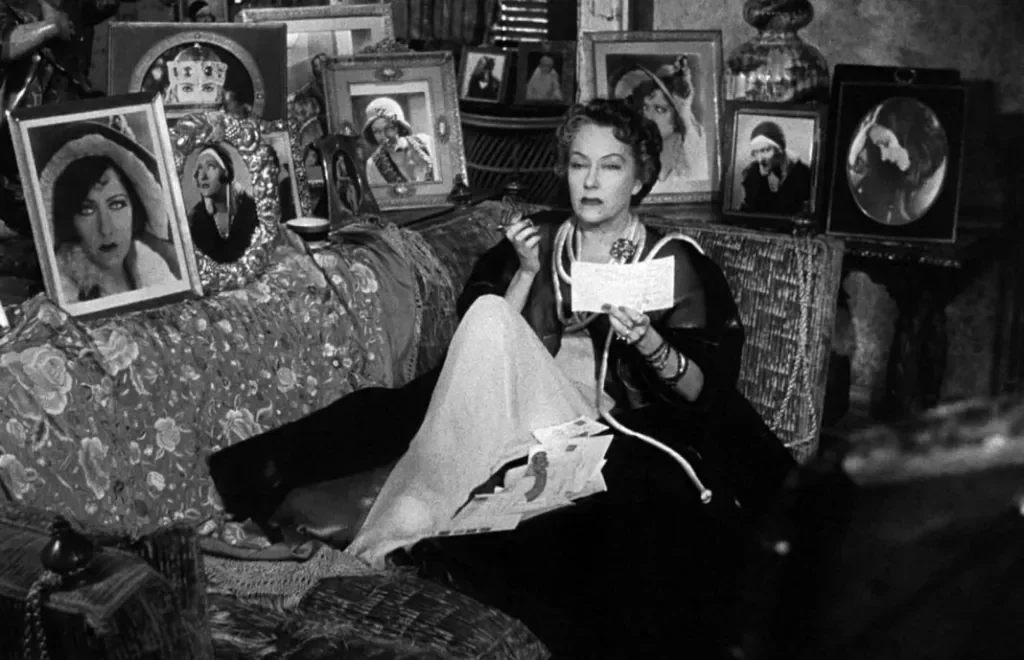
This film technique entails everything you see on the screen and how it is arranged, and in Film Noir, it is often crammed. In the background, you will see objects such as mirrors, trinkets, and curtains, which at times can function as windows into the character themselves. These scenes and settings can feel claustrophobic and a little off centre, a little … odd. Even in the exteriors, there is a sense of darkness and a menacing quality within these cityscapes. These components are exacerbated with asymmetrical compositions and film angles.
There are many scenes throughout this film that highlight this component of film noir. One of which is Norma’s room inside her house. With an array of frames, freezing her image at the peak of her career.
Lighting
Film Noir often used a lighting technique called chiaroscuro, which involved high contrast lighting that created dark and sharp shadows. These contrasts contributed to the undertone of menace within these films. This lighting was often accompanied by other props, such as cigarette smoke, which added a suffocating and murky quality to scenes or street lamps, which highlighted parts but not all of the environment, adding to the feeling of seediness and impending danger.
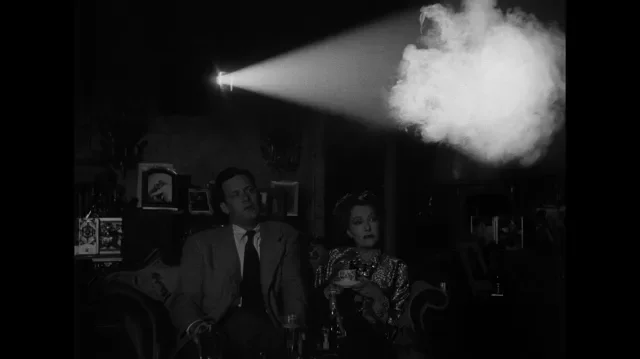
Chiaroscuro lighting is seen in the scene where Queen Kelly is projected for Joe and Norma. This film, directed by Erich Von Stroheim (Max) and starring Gloria Swanson (Norma) is displayed through a cloud of cigarette smoke, a haze that represents the façade of stardom itself. In a moment, it is overtaking the room and in the next it has dissipated, much like Norma’s career.
Thematic Focus
Psychological Tensions
As we discussed earlier, Film Noir aims to unpack the psychology behind crime and to explain the dark side of humanity. There, naturally, is a floomy tone throughout the world within a Film Noir text, but many also allow for humour to play a role, whether it be through the narrator’s witty commentary or self-referentialism. These two aspects help to balance the impact of film noir, allowing these films to approach heavy topics with a more digestible delivery for an already disillusioned audience.
Much of this film deals with the grittiness and tensions of many heavy topics but interspersed throughout is a humour that allows for a more balanced approach. Joe, our protagonist/ narrator often injects his wit into his commentary but also Gloria Swanson’s histrionic delivery of Norma’s lines and the outrageous inclusion of a pet chimp (and his funeral) creates a duality for the audience, allowing us to be both disturbed but simultaneous entertained (much like our human fascination with celebrity culture).
Bibliography
Bello, K. (2023). What Is Film Noir? A Definition, History, and Impact. [online] TheCollector. Available at: https://www.thecollector.com/what-is-film-noir-meaning/.
Encyclopedia Britannica. (n.d.). Film noir - The noir hero. [online] Available at: https://www.britannica.com/art/film-noir/The-noir-hero.
StudioBinder (2024). What is Film Noir – Private Detectives, Corrupt Cops, and Femme Fatales. [online] YouTube. Available at: https://www.youtube.com/watch?v=GkWzOJaAYS0.
